“Anxiety is often a reaction to living too far in the future. Come back to now–where you feet are, where your breath is, where your power lives.” ~ TinyBuddha
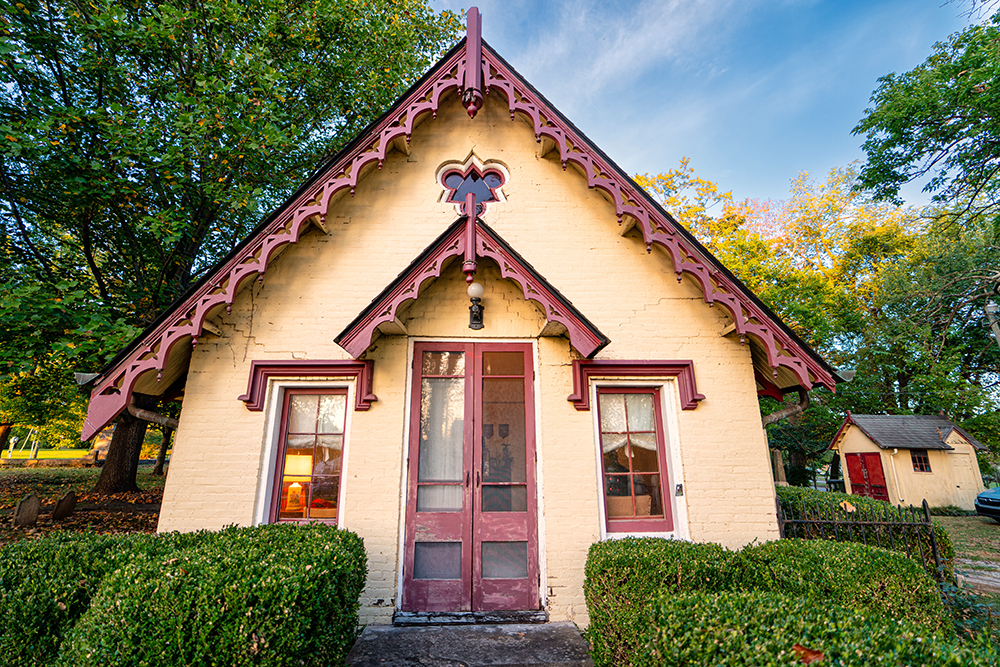
outside
Today, with a little more time and energy, I can tell you about the little house, known as the Chapel, at the Old Episcopal Burial Ground. The land was bought by Christ Church in 1832 from Charlton Hunt, son of Lexington’s first Mayor, John Hunt, for $750. Within six months, the first of two cholera epidemics hit Lexington, killing 500 of the 7,000 residents in 1833, many of them buried in this graveyard. An additional 150 graves were moved from beside the church to the cemetery. The “Carpenter Gothic” chapel was built in 1867 and is often attributed to one of Lexington’s premier architects, John McMurtry. Although no documentation has been found to confirm this, notable architectural historian Clay Lancaster believed McMurtry to be the only possible designer/builder of the chapel based on his Gothic Revival-style structures around town. I did quite a bit of research on McMurtry in grad school. He built or designed over 200 structures in Lexington and Central Kentucky. He was also an inventor. Between 1830 and 1880, and particularly after the American Civil War, he began to patent many of his inventions. Whether McMurtry designed and built the chapel may never be known, but whoever designed it did an impressive job. Its steep-pitched roof, indoor wooden ceilings, soft lighting, compact rooms, and decorative embellishments outside give it an air of old Europe. It was a curious choice for old-country simplicity instead of the East Coast haute couture that early Lexington preferred. The chapel was eventually used to house the church sextons and cemetery groundskeepers, though that is no longer the case. The burial ground and the chapel are on the National Register of Historic Places, and you can read more about their history here in the nomination package. I’ll never be a great architecture historian, but I can sure dig my teeth into some good research about buildings, builders, architects, and the cultural landscape they inspire.
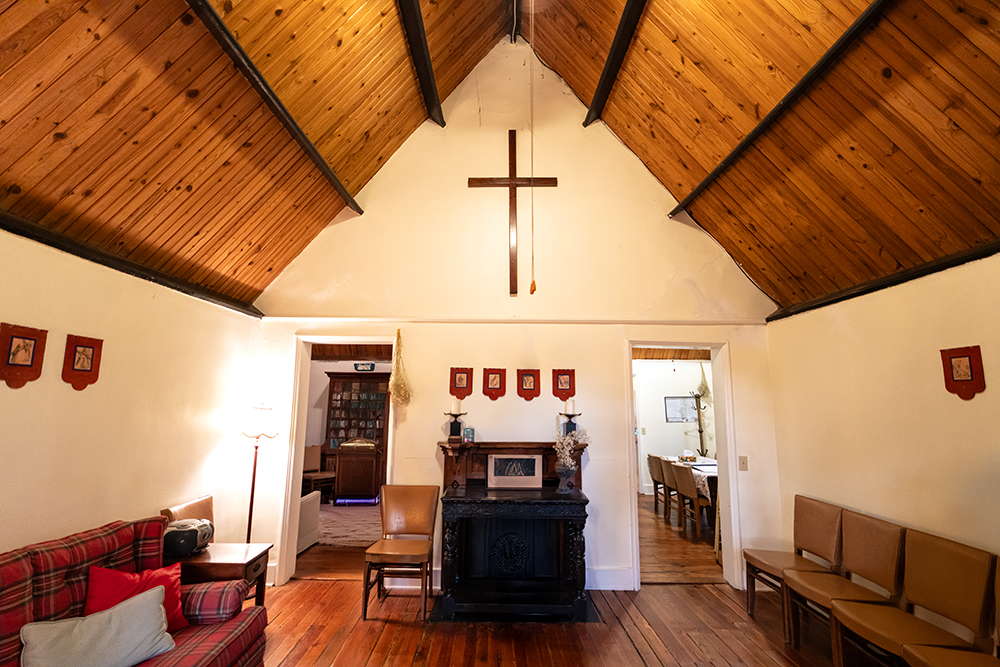
inside
No responses yet